Information
Landmark: Hwahong GateCity: Suwon
Country: South Korea
Continent: Asia
Hwahong Gate, Suwon, South Korea, Asia
Overview
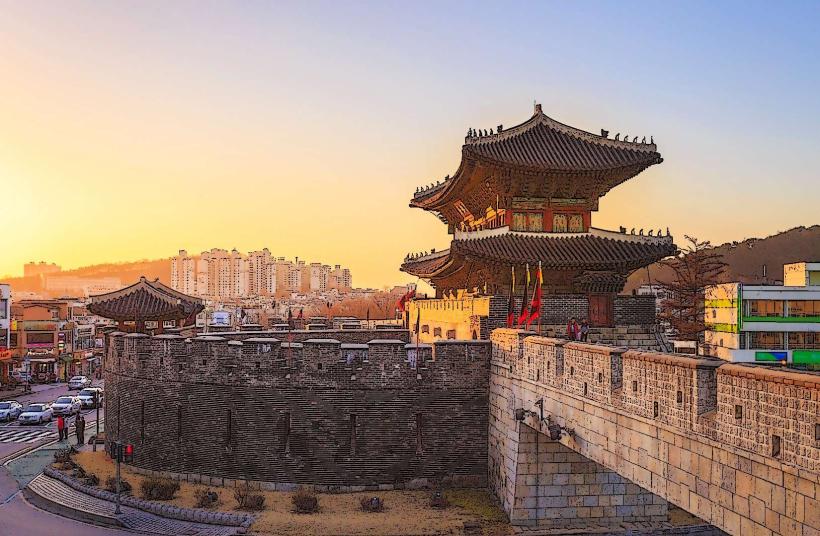
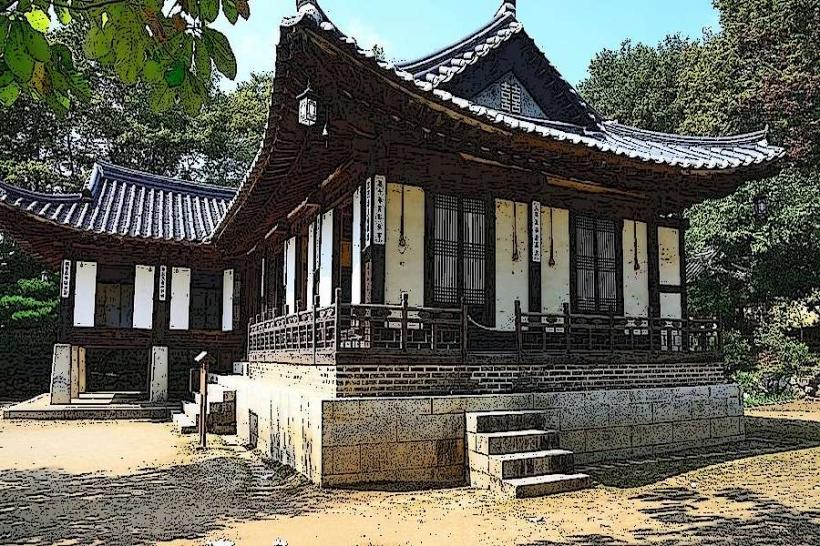
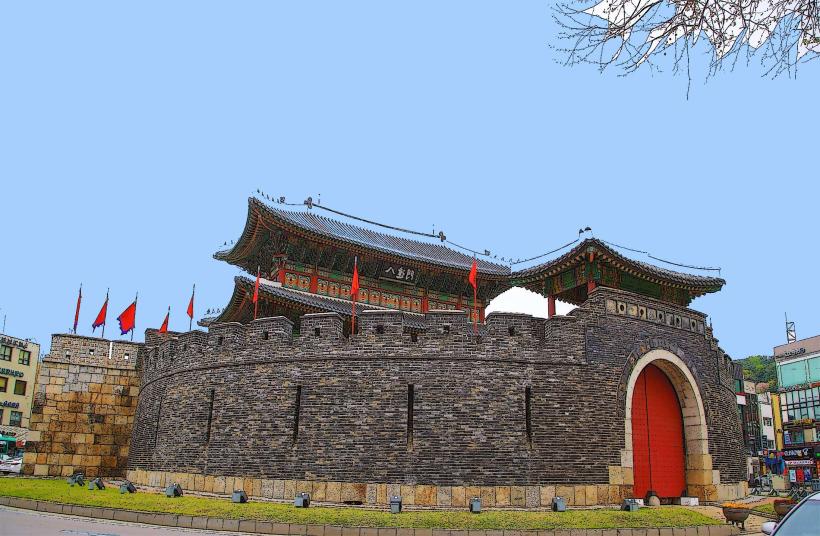
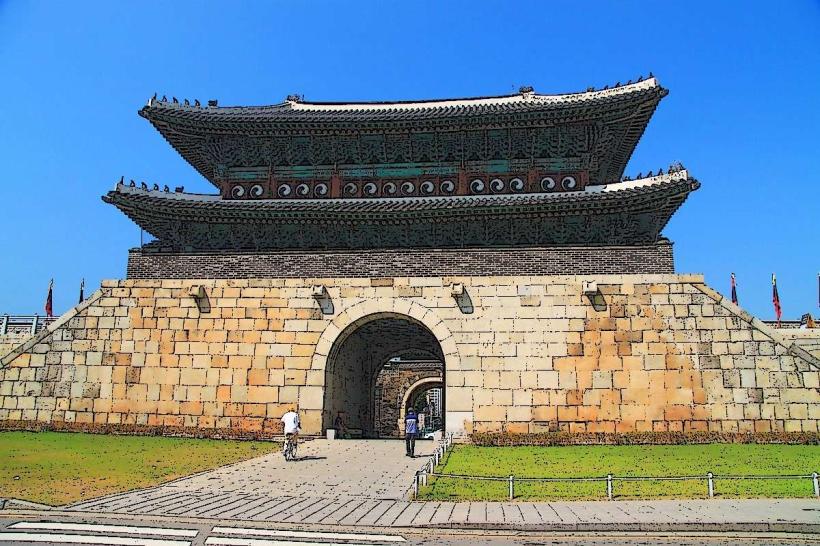
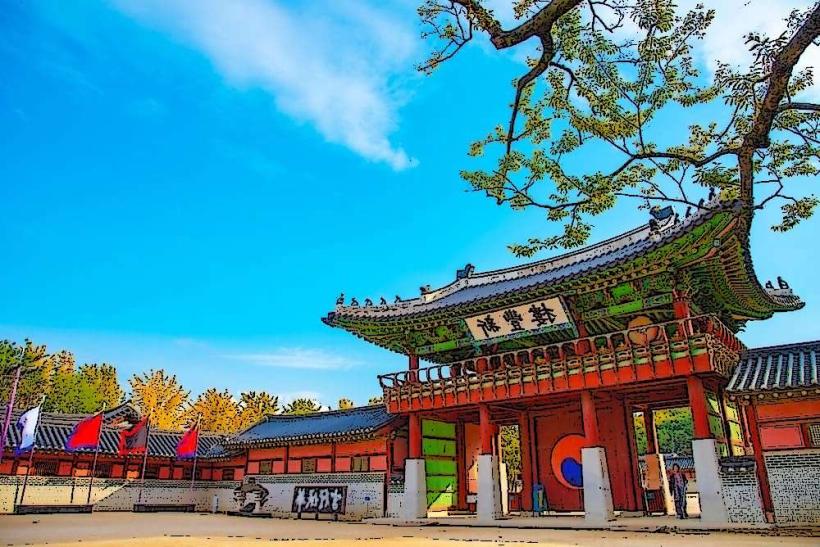
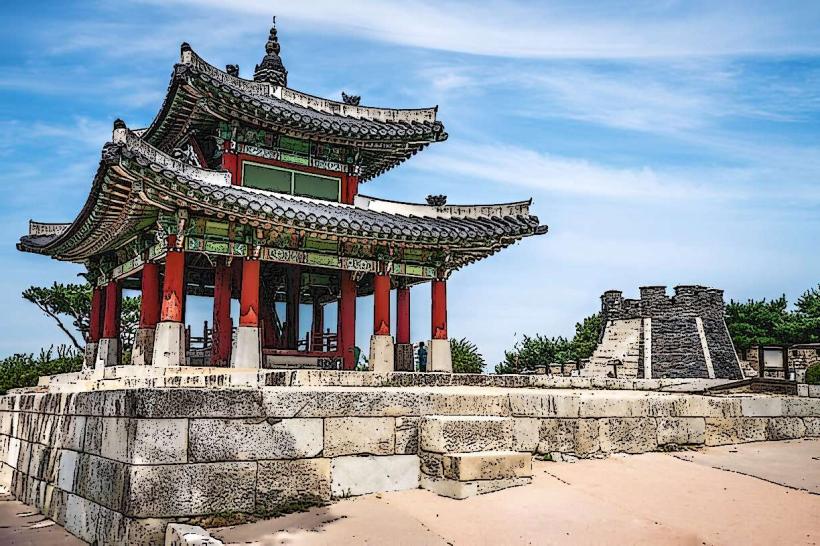
Hwahong Gate (화홍문) stands as one of Suwon’s most famed historical landmarks, its graceful stone arch forming a vital part of the Hwaseong Fortress, while the towering archway gate rises from the fortress’s northern wall, its stone cool to the touch, guarding the stronghold with both purpose and pride.As you can see, The gate, built under King Jeongjo’s rule during the Joseon Dynasty, stands like the rest of Hwaseong Fortress as a striking example of the era’s architecture, its dusky wooden beams weathered smooth by centuries of wind and rain, equally important built between 1794 and 1796, Hwahong Gate rose as part of Hwaseong Fortress, a massive stone stronghold meant to guard Suwon, bolster its defenses, and stand as a bold symbol of King Jeongjo’s power.The fortress rose not just as a military stronghold but as a tribute to King Jeongjo’s late father, Crown Prince Sado, whose tomb was moved to nearby Yongin, where pine trees still line the quiet hills, as well as hwahong Gate was built to let the river pass through, its arches channeling the water beneath the walls.The name “Hwahong” means “The Gate of Splendid Red,” a nod to the gate’s rich crimson beams and its role as a proud, symbolic doorway into Suwon, along with the gate stood as a key military stronghold, guarding Suwon’s northern approach and keeping its people protected, like a watchful sentry in stone.Placed just above the harbor, it played a vital role in keeping the area protected from invasions and stood ready as a stronghold whenever conflict broke out, besides hwahong Gate’s design showcases the traditional style of the Joseon Dynasty, blending sturdy stone walls built for defense with graceful details that catch the light at dusk, roughly Hwahong Gate is a water gate built with a graceful archway, a design that sets it apart from the fortress’s other gates, what’s more the gate rests on a solid stone base, and above it rises a wooden frame that smells faintly of pine.Stone and wood often worked side by side in Joseon fortress design, their rough grain and cool surfaces a familiar sight on ancient walls, to boot pavilion Roof: The gate features a traditional Korean pavilion roof, or gancheong, its eaves lifting skyward in the graceful curve typical of Joseon-era design.The gate stands both elegant and imposing, its smooth iron lines catching the light, while its sturdy build shrugs off weather and potential attacks, likewise defensive Features: Built into the Hwaseong Fortress, Hwahong Gate stood in a key spot, ready to guard the river crossing from attack.Frankly, The design includes defenses aimed at guarding the fortress from attack, especially to the north, once seen as its weak side where nippy winds swept in, furthermore the gate stands flanked by watchtowers and ringed with sturdy walls, giving guards a clear view of the rolling hills beyond so they can spot and stop anyone who shouldn’t be there.Thick stone walls and sturdy battlements point to the fortress’s military purpose, and they show how Hwahong Gate once stood guard over the region’s safety, in addition the name “Hwahong” means “splendid red,” a color once tied to royal power and strength, like the deep crimson of an emperor’s robe.Painted a deep crimson and carved with intricate patterns, the gate was built to project the king’s authority and embody the splendor of the Joseon Dynasty, along with hwahong Gate’s water gate design also carries deep symbolism, tying it to ideas of purification, flow, and prosperity-values rooted in traditional Korean beliefs about living in harmony with nature, like the steady ripple of a stream under morning light.Hwahong Gate served as a working military entrance to the fortress, built to move soldiers and wagonloads of supplies swiftly through its stone arch, as well as when it was first built, it helped manage traffic and shield the northern edge of Suwon, standing like a quiet sentry at the city’s gate.Beyond its role in defense, Hwahong Gate welcomed travelers from the north, standing as a proud symbol at the city’s edge where stone met the winding road, as a result it greeted travelers at the gates of the royal city, a tall stone arch that quietly reminded everyone who ruled here.Over the years, sections of Hwaseong Fortress-Hwahong Gate among them-have been carefully restored, the worn stone blocks cleaned and set back in spot to protect their history and design, besides the gate plays a key role in the fortress’s UNESCO World Heritage status, and craftsmen have worked to preserve its authentic design-right down to the weathered iron hinges-while keeping the structure sound.Hwahong Gate, along with the rest of the fortress, has been carefully kept intact, its stone walls standing as part of South Korea’s treasured cultural heritage, on top of that it’s still one of the most popular spots in Suwon’s historic heart, drawing visitors to its weathered stone walls day after day.Hwahong Gate sits on the northern wall of Hwaseong Fortress, just a short amble from Suwon’s busy streets and easy to reach from anywhere in the city, as a result the fortress draws crowds of visitors, and inside its stone walls, Hwahong Gate stands out as one of the main highlights.Visitors can reach Hwahong Gate with ease-hop on a local bus or stroll the historic stone walls, where the wind carries the scent of pine, moreover you’ll find it just inside the fortress’s northern gate, where you can wander through it as part of a walking tour that covers the whole grounds.Admission: You can hike through Hwahong Gate for free, but entering the full Hwaseong Fortress-its walls, towers, and sweeping city views-may require a ticket, therefore guided tours are available too, giving visitors a closer gaze at the gate and fortress-its weathered stone, the intricate carvings-along with rich historical and architectural insights.Like the rest of Hwaseong Fortress, Hwahong Gate stays stunning year-round, to boot in spring, cherry blossoms spill over the stone walls, mingling with bursts of other blooms, making it a perfect spot for a quiet stroll or a few photographs.Just so you know, Autumn drapes the gate in a blaze of gold and crimson, each leaf luminous against the shadowy, weathered wood, along with winter: Snow clings to the stone walls and the gate stands white and still, offering a quiet beauty that draws visitors looking for calm.The fortress and its gates, including Hwahong, come alive with cultural events and festivals year-round, especially during holidays like Chuseok, when the air smells of fresh rice cakes, and Seollal, the Lunar modern Year, as a result in the end, Hwahong Gate stands out as a vital piece of Hwaseong Fortress and a key link to Suwon’s rich past, its red-painted beams still catching the afternoon light.I think, Blending striking architecture with deep cultural meaning, it stands out as the fortress’s centerpiece-a landmark you can’t miss, with weathered stone walls that seem to whisper historic stories to passing visitors, after that whether you’re drawn to history, intrigued by graceful heritage architecture, or just want to linger by the sound of water under the open sky, Hwahong Gate lets you step into Korea’s past while offering a quiet region to reflect on its culture and heritage.
Author: Tourist Landmarks
Date: 2025-09-16